


Introduction: Why “Clean” Isn’t Enough Anymore
Most communicable diseases spread through three overlapping vectors:
- Soiled hard surfaces (fomites)
- Residual chemical films that trap microbes
- Shared indoor air carrying aerosols and droplets
Traditional cleaning programs focus almost exclusively on visible cleanliness or scent perception, neither of which correlates well with pathogen reduction. In fact, some common practices actively increase risk.
The following framework replaces outdated assumptions with evidence-based environmental hygiene principles that are achievable even for small organizations with limited staff.
 Rule #1: Reduce Soil Load Effectively (The Non-Negotiable First Step)
 Rule #1: Reduce Soil Load Effectively (The Non-Negotiable First Step)
Why Soil Load Matters More Than Disinfectant Strength
Soil load (organic and inorganic debris) shields microorganisms from disinfectants. Proteins, oils, and dust form micro-barriers that:
- Reduce disinfectant efficacy by orders of magnitude
- Allow microbes to persist and re-colonize surfaces rapidly
- Increase cross-contamination via wiping tools
Disinfection without soil removal is scientifically compromised disinfection.
The Correct 2-Step Process

Step 1: Clean (Soil Removal)
- Use Envirotab® solution as a surfactant-assisted cleaner
- Apply generously to hard contact surfaces
- Allow sufficient dwell time to loosen soils
Step 2: Dry (Physical Removal)
- Use ProTab® microfiber wipers
- Remove suspended soils completely
- Avoid re-depositing moisture that allows regrowth
This clean-then-dry approach mirrors best practices in healthcare environmental services and dramatically lowers microbial counts before any antimicrobial action occurs.
What Most Facilities Get Wrong
- One-step “cleaner/disinfectant” sprays
- Over-reliance on paper towels (which redeposit fibers and microbes)
- Reusing damp cloths across multiple rooms
These shortcuts increase pathogen migration, not control.
Rule #2: Eliminate Fragrances and VOC Residues (The Hidden Risk)
The Problem with “Clean Smell” Culture
Fragrances are not neutral. They are typically:
- Oil-based or alcohol-based VOCs
- Designed to persist on surfaces and in air
- Lipophilic (they attract and bind organic matter)
This means fragrance residues can trap microbes, allowing them to “hitch-hike” on chemical films long after cleaning is complete.
Respiratory Impact (Often Overlooked)
Fragrance residues are known to:
- Irritate respiratory epithelial receptors
- Exacerbate asthma, COPD, and chemical sensitivities
- Increase absenteeism in schools and workplaces
In clinics and schools especially, fragrance exposure is a secondary health risk that compounds infection vulnerability.
Best Practice Standard
- Use fragrance-free, residue-free cleaning chemistry
- Leave surfaces chemically neutral
- Allow surfaces to return to a dry, inert state
A truly clean surface is odorless, non-tacky, and dry.
Rule #3: Scrub and Purify Airspaces with Ultra-Low-Dose VCD
Why Surface Cleaning Alone Fails
Airborne transmission is now recognized as a primary pathway for many communicable diseases, including influenza, RSV, and coronaviruses.
Even perfectly cleaned surfaces cannot stop:
- Aerosolized microbes
- Re-settling of airborne pathogens
- Continuous re-introduction from occupants
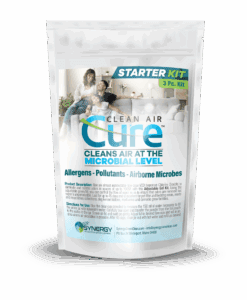 What Is Vaporous Chlorine Dioxide (VCD)?
VCD is an imperceptible, ultra-low-dose form of chlorine dioxide gas that:
- Actively neutralizes airborne bacteria, viruses, and spores
- Disrupts microbial respiration and protein synthesis
- Does not rely on fragrance masking or ozone generation
At proper low concentrations, VCD is:
- Non-corrosive
- Non-irritating
- Safe for occupied spaces
Continuous Air Hygiene vs. Episodic Fogging
| Method | Effectiveness | Occupied Use | Residual Protection |
|---|---|---|---|
| Fogging | Episodic | No | Minimal |
| Ozone | Reactive, harsh | No | Risky |
| Ultra-Low-Dose VCD | Continuous | Yes | Ongoing |

VCD acts as an always-on air scrubber, closing the gap that surface cleaning alone cannot address.
How the 3 Rules Work Together (System View)
- Surface soils are removed → microbes are exposed
- No chemical residues remain → no microbial shelter
- Airborne microbes are neutralized → re-contamination is suppressed
This creates a low-transmission environment, not just a visually clean one.
Alternative Perspectives (And Why They Fall Short)
- “We disinfect frequently” → Disinfection fails without soil removal
- “We use scented cleaners so people feel safe” → Fragrance ≠ hygiene
- “We installed air fresheners or ionizers” → These do not neutralize microbes
Each addresses perception, not transmission mechanics.