
High-touch surfaces are the primary transmission pathway for pathogens in commercial facilities. This guide explains how Facility Managers can train staff to properly clean, disinfect, and protect surfaces using microfiber systems and chlorine dioxide technology—without causing surface damage or residue buildup.
Why High-Touch Surfaces Matter
High-touch surfaces—door handles, elevator buttons, light switches, railings, desks, touchscreens—act as microbial transfer points.
Studies show that pathogens can survive:
- Influenza virus: 24–48 hours on hard surfaces
- Norovirus: Up to weeks
- MRSA: Days to months
- SARS-CoV-2: Up to 72 hours depending on surface type
Transmission occurs when organic soil and microbial load are not fully removed prior to disinfection.
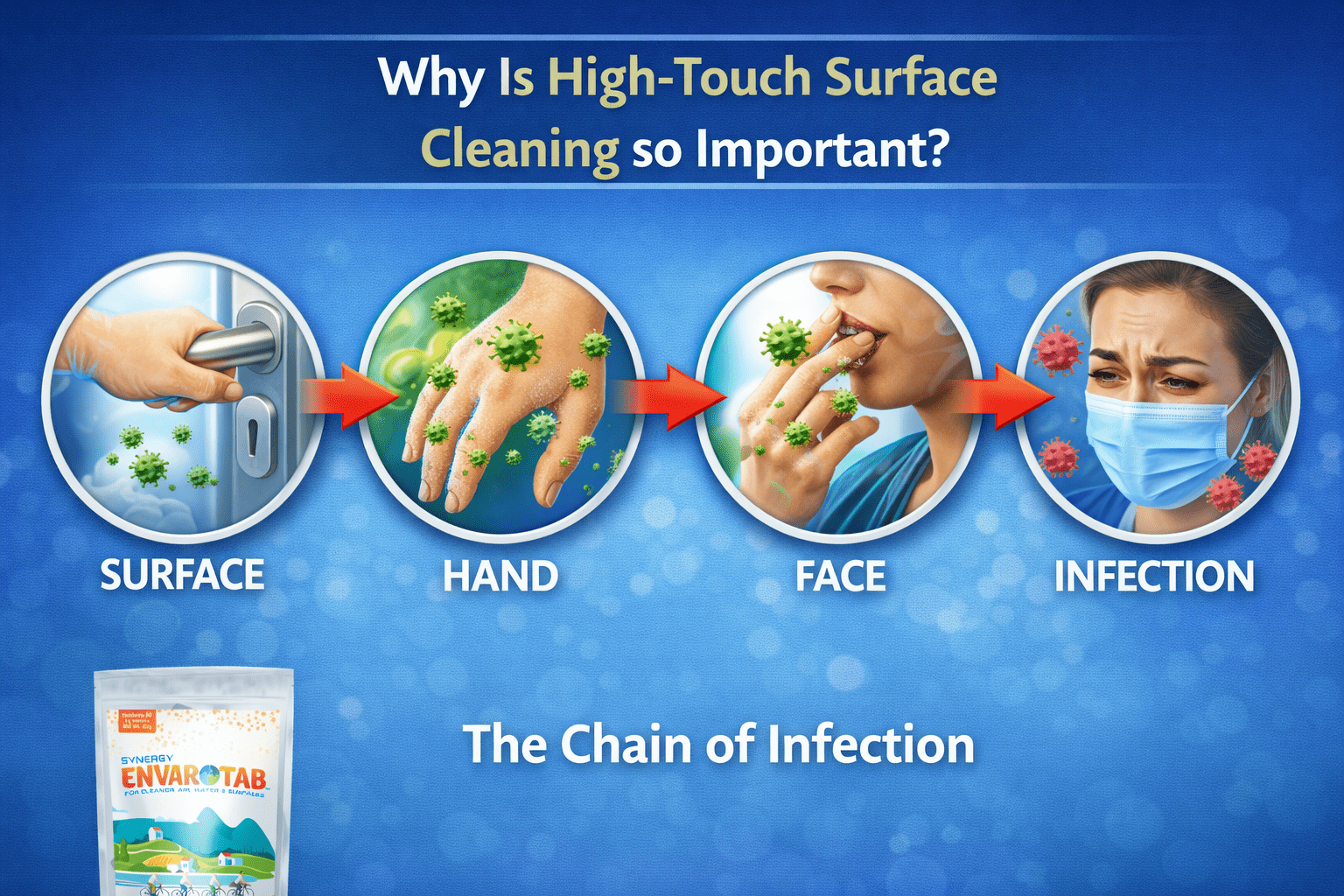
Training staff to understand this chain of infection is critical:
Surface → Hand → Face → Infection
Step 1: Cleaning Must Come Before Disinfection
Disinfectants are significantly less effective in the presence of organic matter.
Organic load (proteins, skin cells, oils, dust) can:
- Physically shield microorganisms
- Chemically neutralize disinfectants
- Reduce effective concentration
Training Standard:
- Use a low-to-no residue cleaner.
- Apply with a clean microfiber cloth.
- Remove visible soil completely.
- Allow surface to dry (or wipe dry if required).
Why Low-Residue Chemistry Matters
Many common cleaners contain surfactants that leave a thin film. That residue:
- Attracts additional soil
- Interferes with disinfectant performance
- Creates long-term surface dulling or tackiness
A low-residue system reduces re-soiling cycles and protects finishes.
Step 2: Apply an EPA-Registered Disinfectant with Verified Contact Time
After cleaning, apply chlorine dioxide solution at labeled concentration.
Why Chlorine Dioxide (ClO₂)?
ClO₂ is a selective oxidizer with several advantages:
- Broad-spectrum efficacy (bacteria, viruses, fungi)
- Effective at low ppm concentrations
- Minimal formation of chlorinated byproducts
- Less corrosive than sodium hypochlorite (bleach)
- Does not form heavy surface films like quats
The Scientific Mechanism of ClO2 Microbial Disruption

ClO₂ works via electron transfer oxidation:
- Disrupts cell membranes
- Denatures proteins
- Inactivates viral capsids
- Damages nucleic acids
Unlike bleach, ClO₂ does not chlorinate organic matter to the same degree, which reduces material degradation and odor issues.
Dwell Time: The Most Common Training Failure
A disinfectant cannot achieve its kill claim if wiped dry too soon.
Typical concentration & contact times:
- 1–3 minutes for vegetative bacteria
- 5–10 minutes for viruses and tougher pathogens
- Longer for spores
Training Protocol:
- Apply enough solution to keep surface visibly wet.
- Start timing immediately.
- Do not wipe dry unless product label permits.
- Reapply if surface dries prematurely.
Supervisors should routinely audit dwell time compliance.
Why Microfiber Is Essential
Microfiber cloths contain split fibers that:
- Increase surface area
- Mechanically remove 99%+ of bacteria with water alone (when properly used)
- Reduce cross-contamination risk
- Require less chemical saturation
Cross-Contamination Reduction
Implement:
- Color-coded microfiber systems
- One cloth per defined cleaning zone
- Proper laundering protocol
Microfiber enhances soil removal prior to chemical disinfection, allowing ClO₂ to work on microorganisms rather than debris.
Surface Compatibility Considerations
Bleach (sodium hypochlorite):
- Corrosive to stainless steel
- Damages finishes
- Degrades fabrics
- Produces strong odor
Quats:
- Leave cationic residue
- Build up over time
- Contribute to sticky surfaces
- May reduce slip resistance
Properly diluted chlorine dioxide:
- Less corrosive at use concentration
- Minimal residue
- Compatible with metals, plastics, laminates, sealed wood (verify with spot testing)
Training staff to avoid over-concentration is critical.
Building a High-Touch Surface SOP
Facility Managers should implement:
- Surface identification list (document all high-touch points).
- Cleaning frequency schedule.
- Product dilution control.
- Dwell time verification.
- Microfiber rotation protocol.
- Periodic supervisory audits.
Standardization improves:
- Consistency
- Safety
- Surface longevity
- Chemical efficiency
- Staff accountability
Cost of Doing It Wrong
Improper disinfection leads to:
- Increased illness-related absenteeism
- Surface replacement costs
- Chemical overuse
- Slips due to residue buildup
- OSHA exposure concerns
- Poor indoor air quality
A system-based approach using low-residue cleaners, microfiber technology, and chlorine dioxide reduces long-term operational costs.
The Modern Cleaning System Approach
The most effective facilities use an integrated model:
- Mechanical soil removal (Microfiber)
- Low-residue cleaning chemistry
- Targeted oxidation disinfection (ClO₂ tablets)
- Proper dwell time enforcement
- Surface protection mindset
This reduces chemical load while improving microbial control.