
Healthy Soil, Healthy Plants: How ClO₂ Supports Greenhouse and Garden Sanitation
Understanding how chlorine dioxide can help manage harmful microorganisms while supporting the conditions necessary for healthy soil, strong roots, and productive plants. Every successful garden begins beneath the surface.
Whether you're growing vegetables in a backyard garden, cultivating flowers in a greenhouse, or managing a commercial growing operation, healthy plants depend on much more than sunlight, water, and fertilizer. They also depend on the complex biological environment surrounding their roots.
Soil is a living ecosystem containing bacteria, fungi, and other microorganisms. Many are essential to plant development, helping release nutrients, improve soil structure, and support healthy root systems. Others, however, can contribute to plant diseases, damage developing roots, and interfere with normal growth.
Maintaining a healthy balance between these microorganisms is an important part of successful gardening and greenhouse management.
Chlorine dioxide (ClO₂), a powerful antimicrobial oxidizing agent, has demonstrated considerable potential for controlling microbial contamination in agricultural water and irrigation systems. Understanding how it works, and where its application is most appropriate, can help growers develop healthier and more productive growing environments.
Understanding the Microbial Balance of Healthy Soil
The Beneficial Microorganisms That Help Plants Thrive
A single gram of healthy soil can contain millions or billions of microorganisms, representing an extraordinarily diverse biological community.
Among these organisms are bacteria and fungi that contribute to the natural processes supporting plant growth.
Beneficial soil microorganisms perform several important functions:
- Nutrient cycling: Microorganisms break down organic matter and help convert nutrients into forms plants can absorb.
- Root development: Certain bacteria and fungi form beneficial associations with plant roots, helping improve nutrient uptake.
- Soil structure: Microbial activity contributes to soil aggregation, improving drainage, aeration, and moisture retention.
- Natural competition: Beneficial microorganisms can compete with disease-causing organisms for nutrients and living space.
- Plant resilience: Some microorganisms stimulate plant defense responses, helping plants tolerate certain environmental and biological stresses.
 Mycorrhizal fungi are a familiar example. These beneficial fungi form relationships with plant roots, extending their ability to access phosphorus, water, and other resources.
The relationship between plants and beneficial microorganisms is an important reason why healthy soil should never be viewed simply as dirt requiring sterilization.
The objective of good soil management is to encourage beneficial biological activity while reducing the conditions that allow harmful microorganisms to flourish.
When Harmful Microorganisms Threaten Plant Development
Not every microorganism living in soil contributes positively to plant health.
Certain bacterial and fungal pathogens, along with fungus-like organisms known as oomycetes or water molds, can damage roots, infect stems, and interfere with the normal transport of water and nutrients.
These problems can be particularly troublesome in greenhouses, where warm temperatures, frequent irrigation, high humidity, and closely spaced plants may create favorable conditions for disease development.
Common Microbial Threats to Gardens and Greenhouses

Pythium – Root Rot and Damping-Off
Pythium species are water molds commonly associated with root rot and damping-off in seedlings. These organisms thrive under excessively wet growing conditions and can cause young plants to wilt, collapse, or fail to establish healthy root systems.
Fusarium – Root Disease and Vascular Wilt
Certain Fusarium fungi can invade plant roots and vascular tissue, interfering with the movement of water and nutrients. Infected plants may exhibit yellowing leaves, stunted growth, wilting, and eventual decline.
Phytophthora – Root and Crown Diseases
Phytophthora species include destructive plant pathogens capable of spreading through contaminated water and growing media. Some cause serious root and crown infections in vegetables, ornamental plants, and nursery crops.
Ralstonia – Bacterial Wilt
Some members of the bacterial genus Ralstonia cause vascular wilt diseases in susceptible crops, including tomatoes and other economically important plants.
These examples illustrate why managing microbial contamination is an important part of maintaining a healthy growing environment.
However, the presence of a particular microorganism does not always mean that disease will develop. The susceptibility of the plant, environmental conditions, and concentration of the pathogen also influence the outcome.
How Chlorine Dioxide Helps Control Harmful Microorganisms
Chlorine dioxide (ClO₂) is an antimicrobial compound used in water treatment, sanitation, and other applications where controlling microbial contamination is important.
Although its name resembles chlorine, chlorine dioxide has distinct chemical properties and operates through a different oxidation mechanism.
ClO₂ reacts with susceptible components of microorganisms, interfering with cellular functions essential for their survival.
Research has demonstrated activity against a range of Gram-positive and Gram-negative bacteria, fungi, and other microorganisms under appropriate treatment conditions.
Its effectiveness depends on several factors, including the organism being targeted, concentration, contact time, water chemistry, and the amount of organic material present.
Why Its Broad-Spectrum Antimicrobial Properties Matter
Agricultural growing environments can contain multiple types of microorganisms capable of causing contamination or disease.
A sanitation method with broad antimicrobial activity may therefore offer advantages when several microbial hazards are present.
Chlorine dioxide's established properties make it particularly interesting for applications such as:
-
Reducing certain microbial contaminants in irrigation water.
-
Managing bacterial biofilms within water distribution systems.
-
Treating appropriately designated greenhouse equipment and surfaces.
-
Reducing exposure to certain waterborne plant pathogens.
-
Supporting sanitation programs designed to limit microbial transfer between growing areas.
These capabilities are valuable, but they do not mean ClO₂ automatically eliminates every plant pathogen or distinguishes harmful microorganisms from beneficial ones.
Effective applications require an understanding of both the treatment process and the biological environment being protected.
Irrigation Water – An Important Pathway for Microbial Contamination
Water is essential to plant development, but it can also serve as a means of transporting unwanted microorganisms into gardens and greenhouses. Depending on its source, irrigation water may contain bacteria, fungal propagules, organic debris, and other contaminants. Potential sources of contamination include storage tanks, reservoirs, irrigation tubing, recirculating hydroponic systems, and poorly maintained distribution equipment. Once introduced into an irrigation system, certain microorganisms can spread throughout the growing environment.
The Problem of Biofilm in Irrigation Systems
Biofilms are communities of microorganisms that attach to surfaces and surround themselves with a protective matrix.
Inside irrigation systems, biofilms may develop along the interior surfaces of pipes, hoses, tanks, and drip irrigation components.
Over time, these deposits can contribute to restricted water flow, clogged emitters, and persistent microbial contamination.
Biofilms are particularly difficult to manage because their protective structure can reduce the effectiveness of some cleaning and sanitation practices.
Research has identified chlorine dioxide as a useful option for addressing certain microbial biofilms in irrigation systems. Its water solubility and oxidizing activity make it suitable for consideration in properly designed water-treatment programs.
Managing these contamination sources can help protect the quality and reliability of the water delivered to growing plants.
Can Chlorine Dioxide Help Preserve Healthy Soil Biology?
One of the most interesting questions surrounding chlorine dioxide in agriculture concerns its potential effect on the natural microbial communities found in soil.
Because ClO₂ is an antimicrobial oxidizer, it would be unreasonable to assume that it destroys harmful microorganisms while automatically leaving beneficial bacteria and fungi untouched.
However, research indicates that the relationship between chlorine dioxide-treated irrigation water and soil microbial communities may be more nuanced.
What a Commercial Spinach-Growing Study Revealed
A peer-reviewed study published in PLOS ONE in 2018 examined the effects of chlorine dioxide-treated irrigation water on bacterial communities in commercial baby spinach production. Researchers compared treated and untreated irrigation water, examining the bacterial populations associated with the water, spinach plants, and underlying soil.
They found that chlorine dioxide treatment changed the relative abundance of certain bacterial groups but did not significantly alter the overall diversity of the bacterial communities measured.
In particular, treatment was associated with reductions in the relative abundance of Pseudomonadaceae and Enterobacteriaceae on spinach plants. These families include organisms associated with food spoilage and foodborne illness, although not all members are harmful. The researchers concluded that the treatments produced measurable changes in specific bacterial groups without substantially altering the major bacterial community structures under the conditions studied.
What This Means for Soil Balance
These findings suggest that managing microorganisms in irrigation water does not necessarily result in widespread disruption of the soil's bacterial community. This is an encouraging observation for growers interested in sanitation practices that work alongside healthy soil management.
However, the study does not establish that chlorine dioxide selectively destroys harmful soil bacteria, that direct soil treatment improves microbial balance, or that comparable results will occur across every growing environment. Its greater significance is demonstrating that carefully managed irrigation-water treatment can affect microbial contamination while leaving overall bacterial diversity relatively stable in a particular agricultural setting.
The practical objective should be to manage microbial risks without unnecessarily disturbing the beneficial biological processes that support healthy plant development.
Chlorine Dioxide and the Prevention of Root Diseases
Root diseases present a continuing challenge for greenhouse operators, nurseries, and gardeners. Because roots are generally hidden beneath the soil surface, problems may remain unnoticed until plants begin exhibiting visible symptoms. These can include wilting despite adequate moisture, yellowing leaves, reduced growth, and eventual plant collapse.
By the time these symptoms appear, substantial root damage may already have occurred.
Reducing Exposure Before Pathogens Reach the Roots
One preventive strategy is to reduce the movement of certain disease-causing organisms through irrigation water.
USDA Agricultural Research Service investigations have documented chlorine dioxide activity against organisms including Fusarium oxysporum and other plant pathogens under experimental conditions. Researchers also explored its usefulness in reducing pathogen transmission through irrigation water used in greenhouse and nursery production.
Nevertheless, antimicrobial effectiveness varies by pathogen. Some research involving Phytophthora capsici, for example, found limited effectiveness against particular pathogen structures under the tested conditions.
Healthy roots still depend on adequate drainage, appropriate watering, sufficient oxygen, suitable nutrition, and sound growing practices.
Practical Applications for Greenhouse Operators and Gardeners
The most established agricultural applications of chlorine dioxide involve sanitation and water management rather than routine sterilization of established garden soil.
For greenhouse operators, these applications may be particularly relevant because water often circulates through interconnected growing systems.
Irrigation Water Treatment
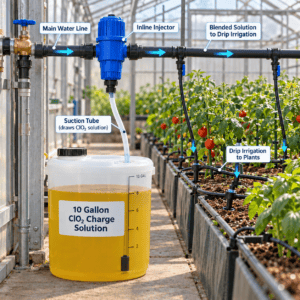
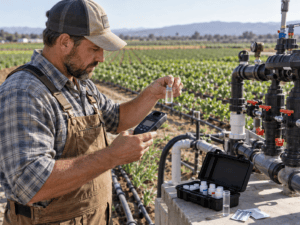
Testing and managing irrigation water quality can help identify and reduce potential sources of microbial contamination. Where an appropriate chlorine dioxide treatment is authorized, it may be incorporated into a broader irrigation-water management program. Treatment should account for water chemistry, contact time, microbial targets, crop compatibility, and possible chemical residues.
Irrigation Equipment Maintenance
Tanks, water lines, filters, and irrigation components should be inspected regularly for accumulated debris and microbial buildup. Cleaning and appropriately labeled sanitation treatments can help reduce contamination sources and maintain water delivery.
Greenhouse Surface and Equipment Sanitation
Reusable planting trays, propagation equipment, benches, tools, and work surfaces can transfer microorganisms between crops. Thorough cleaning followed by suitable sanitation is an important preventive measure. Chlorine dioxide may be an option for certain equipment and surface applications where specifically permitted by the product label.
Between-Crop Sanitation
The period between planting cycles provides an opportunity to remove plant debris, clean irrigation equipment, inspect growing areas, and address recurring contamination problems.
Preventive sanitation is especially valuable when previous crops have experienced bacterial or fungal disease.
Outdoor Garden Management
For backyard gardeners, the most practical emphasis should remain on healthy soil management, clean tools, suitable irrigation water, and the early identification of disease problems.
Direct application of chlorine dioxide to garden soil should not be assumed necessary or beneficial. The evidence supporting agricultural water treatment cannot automatically be extended to direct soil applications.
Five Essential Practices for Maintaining Healthy Soil Balance
1. Encourage Beneficial Soil Microorganisms
Support biological diversity through appropriate organic matter management, responsible compost use, and practices that protect soil structure.
Beneficial microorganisms contribute to nutrient availability, root development, and the natural functioning of soil ecosystems.
2. Maintain Proper Drainage and Soil Aeration
Excess moisture can reduce oxygen availability around roots and create conditions favorable to several destructive root pathogens.
Proper drainage helps roots remain healthy while supporting aerobic biological activity.
3. Avoid Overwatering
More water does not necessarily produce healthier plants.
Watering schedules should reflect crop requirements, weather, soil characteristics, and the moisture needs of individual plants.
4. Monitor Irrigation Water and Equipment
Regularly inspect tanks, irrigation tubing, filters, and distribution systems for contamination and biofilm accumulation. Where waterborne microbial risks have been identified, evaluate suitable sanitation and treatment options.
5. Identify Plant Problems Before Applying Treatments
Yellowing leaves, wilting, and slow growth are not always signs of microbial infection. Nutrient deficiencies, unsuitable soil pH, excessive moisture, temperature stress, and other environmental factors can produce similar symptoms. Correct diagnosis helps prevent unnecessary treatments and supports more effective solutions.
Does Chlorine Dioxide Improve Plant Growth?

Chlorine dioxide should not be considered a fertilizer, soil amendment, or universal plant-growth stimulant. Its established agricultural value is primarily associated with antimicrobial activity in suitable sanitation and water-treatment applications. However, reducing certain contamination risks may help growers maintain conditions more favorable to healthy plant development.
For example, appropriately managed irrigation systems may deliver cleaner water, reduce the movement of some pathogens, and limit biofilm-related maintenance problems. These improvements can contribute to more reliable growing conditions. There are also important considerations when chlorine dioxide is used around edible crops.
Research involving treated irrigation water has documented the potential for chlorate residues to accumulate in plant tissue under certain conditions. This makes treatment design, crop compatibility, and residue management essential considerations rather than optional precautions.
No single sanitation product can replace these fundamentals.
Frequently Asked Questions About Chlorine Dioxide and Soil Health
Can chlorine dioxide kill harmful bacteria in soil?
Chlorine dioxide has demonstrated antimicrobial activity against many susceptible bacteria. However, effectiveness in laboratory testing or water treatment does not automatically establish effectiveness in complex soil environments.
Organic matter, soil chemistry, microbial populations, and treatment conditions can all influence results.
Does chlorine dioxide kill beneficial soil bacteria?
Chlorine dioxide is not inherently selective between harmful and beneficial microorganisms.
Its effects depend on exposure conditions, which is why unnecessary direct soil applications should be avoided.
Can chlorine dioxide prevent root rot?
Chlorine dioxide treatment of irrigation water may reduce exposure to certain waterborne plant pathogens.
However, it cannot be relied upon to prevent every root disease or cure an infection already established in plant tissue or soil.
Can chlorine dioxide be used in greenhouses?
Yes, chlorine dioxide has been studied and used in certain greenhouse sanitation and water-treatment applications.
Actual use must be consistent with the specific product's registered labeling and applicable regulations.
Is chlorine dioxide suitable for vegetable gardens?
Suitability depends on the intended application, treatment formulation, crop, and approved product instructions.
A chlorine dioxide product intended for equipment sanitation is not necessarily authorized for irrigation-water treatment or direct contact with edible crops.
What is the best way to maintain healthy soil bacteria?
Maintaining suitable moisture, drainage, organic matter, aeration, and nutrient conditions encourages beneficial soil organisms.
Preventing the introduction and spread of disease-causing microorganisms is another important part of maintaining a healthy growing environment.
Healthy Soil Begins With Responsible Microbial Management
Successful gardening and greenhouse production depend on balance. Beneath every healthy plant is a complex biological system that supports nutrient cycling, root development, moisture management, and natural resistance to environmental stresses. Protecting that system means encouraging beneficial microorganisms while limiting conditions that allow harmful bacteria, fungi, and other plant pathogens to become established.
Chlorine dioxide offers an interesting and increasingly studied approach to microbial management, particularly through its demonstrated activity in irrigation-water treatment, biofilm control, and appropriate greenhouse sanitation applications. Research also suggests that carefully managed chlorine dioxide treatment of irrigation water can influence certain microbial populations without necessarily disrupting the broader diversity of soil bacteria.
These findings are promising, although further research is necessary to determine how various treatment strategies affect soil ecosystems, crop performance, and long-term plant health.
The future of productive gardening is not about eliminating the microscopic life beneath our feet. It is about understanding that life, protecting its beneficial functions, and managing the microbial threats that can interfere with healthy plant development.
At Synergy Green Clean, we believe that better sanitation begins with a better understanding of the science. Explore our educational resources to learn more about chlorine dioxide, microbial contamination, water treatment, and the evolving role of antimicrobial technologies in maintaining cleaner, healthier environments.
Scientific References
The following published research supports the article's discussion of chlorine dioxide and agricultural microbial management.
1. Truchado, P., et al. (2018). Impact of chlorine dioxide disinfection of irrigation water on the epiphytic bacterial community of baby spinach and underlying soil. PLOS ONE, 13(7), e0199291. Read the study.
2. Copes, W. E., Barbeau, B., & Chastagner, G. A. (2017). Chlorine Dioxide for Irrigation Water Treatment. Biology, Detection, and Management of Plant Pathogens in Irrigation Water, pp. 251–265. Read the chapter abstract.
3. López-Gálvez, F., et al. (2018). Demonstration tests of irrigation water disinfection with chlorine dioxide in open field cultivation of baby spinach. Journal of the Science of Food and Agriculture. Read the study abstract.
4. Food Control (2019). Suitability of chlorine dioxide as a tertiary treatment for municipal wastewater and use of reclaimed water for overhead irrigation of baby lettuce. Read the study.
Educational notice: This article discusses chlorine dioxide as a chemical technology, not any particular commercial formulation. Agricultural uses of chlorine dioxide are subject to product-specific labeling, crop suitability, and applicable regulations. Treatments should only be performed in accordance with authorized uses and safety instructions.